
TDEE Calculator
Accurately estimate your total daily energy expenditure to optimize calorie intake for weight loss, muscle gain, or maintenance.
Visit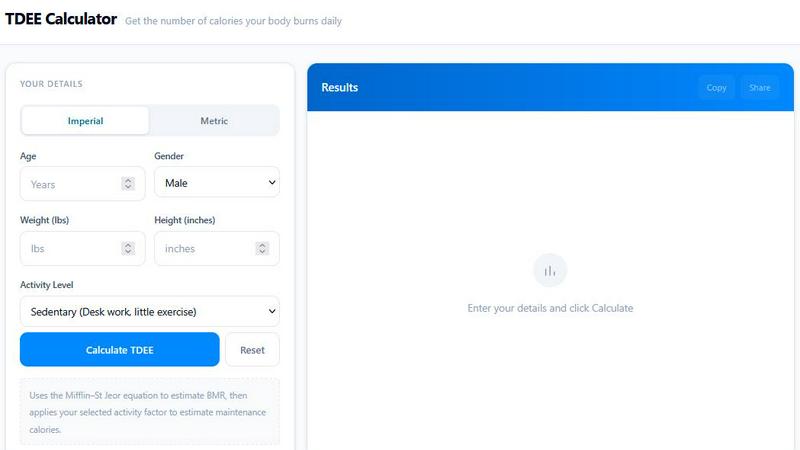
About TDEE Calculator
The TDEE Calculator, available at TDEE.io, is a fast, accurate, and completely free online tool designed to help individuals estimate their Total Daily Energy Expenditure (TDEE) and plan their daily calorie intake with confidence. It serves a broad audience, including anyone looking to lose weight, build muscle, maintain their current physique, or simply gain a deeper understanding of their body's energy needs. The core value proposition of this product is its ability to replace guesswork with reliable, science-based data. By inputting basic personal details such as age, sex, height, weight, and activity level, users receive an instant calculation of their maintenance calories. The tool goes beyond a simple number, providing practical targets for creating a calorie deficit for fat loss or a surplus for muscle gain, along with macro guidance and activity-based adjustments. It is designed for speed, clarity, and practical use, making it an ideal starting point for anyone beginning their fitness or nutrition journey. The calculator utilizes the proven Mifflin-St Jeor equation, a method validated by research in the American Journal of Clinical Nutrition, ensuring that the estimates are grounded in real physiology. Whether you are a complete beginner or a seasoned athlete refining your diet, the TDEE Calculator offers a simple, actionable foundation that can be refined over time using real-world results. The tool emphasizes that its output is a starting estimate, encouraging users to track their progress and make small adjustments as needed.
Features of TDEE Calculator
Mifflin-St Jeor Equation
The TDEE Calculator uses the Mifflin-St Jeor equation, which research has shown to be one of the most accurate methods for estimating resting metabolic rate in healthy adults. This feature calculates your Basal Metabolic Rate (BMR) separately for men and women using a specific formula that factors in weight in kilograms, height in centimeters, and age. By using this validated scientific approach, the tool provides a reliable baseline that is far superior to generic calorie recommendations, giving users confidence in their starting point for diet planning.
Activity Level Selection
This feature allows users to precisely tailor their calorie estimate by selecting from five distinct activity levels: Sedentary, Light Exercise, Moderate Exercise, Heavy Exercise, and Athlete. Each level corresponds to a specific activity factor (ranging from 1.2 to 1.9) that is multiplied by the user's BMR to calculate their TDEE. This ensures that the final calorie number accurately reflects the energy demands of a person's daily life and exercise routine, from a desk worker with little movement to an elite athlete with multiple daily training sessions.
Instant Calorie Deficit and Surplus Recommendations
Beyond calculating maintenance calories, the tool provides immediate, actionable insights for weight management. It automatically generates recommendations for creating a calorie deficit for fat loss, typically in the range of 250-500 calories, and a calorie surplus for muscle gain, typically in the range of 200-350 calories. This feature eliminates the need for users to do manual math, giving them clear daily targets to work towards for their specific goal, whether it is losing weight or building muscle.
Macro Guidance and Reset Functionality
The TDEE Calculator provides helpful macro guidance, allowing users to understand how their daily calorie target can be divided into protein, carbohydrate, and fat goals that align with their training style and lifestyle. Additionally, the tool includes a convenient "Reset" button that clears all input fields instantly, allowing users to quickly start a new calculation for themselves or for another person without refreshing the page. This focus on user experience makes the tool efficient for repeated use.
Use Cases of TDEE Calculator
Weight Loss Planning
Individuals aiming to lose weight can use the TDEE Calculator to find their maintenance calories and then establish a sustainable calorie deficit. By entering their details, they receive a specific daily calorie target for fat loss, typically a deficit of 250-500 calories. This provides a clear, measurable goal that moves beyond vague advice to "eat less." Users can then track their food intake against this target, monitor their weight over 2-3 weeks, and adjust as needed, ensuring their weight loss plan is both effective and based on their unique physiology.
Muscle Gain and Bulking
For those focused on building muscle, the calculator provides a precise daily calorie surplus target, typically 200-350 calories above maintenance. This feature helps users avoid the common pitfalls of bulking, such as eating too little to see gains or eating too much and gaining excessive fat. By knowing their exact surplus, individuals can structure their nutrition to support muscle protein synthesis and recovery from training, ensuring that the extra calories are used effectively for growth rather than being stored as body fat.
Meal Planning and Macro Distribution
Fitness enthusiasts and dieters can use the TDEE Calculator to inform their meal planning. Once the daily calorie target is known, users can divide that number into specific goals for protein, carbohydrates, and fats. This structured approach helps ensure that an individual's diet meets their performance and body composition needs. For example, someone in a deficit can prioritize protein to preserve muscle mass, while an athlete can ensure adequate carbohydrates for energy, all based on the foundational calorie number provided by the tool.
Performance Optimization for Athletes
Athletes and highly active individuals can use the TDEE Calculator to ensure they are eating enough to support their training and recovery. By selecting the "Athlete" activity level, which accounts for twice-daily training or very active work, they get an accurate estimate of their high energy demands. This prevents the negative effects of undereating, such as poor recovery, hormonal imbalances, and decreased training quality. The tool helps them maintain energy balance to perform at their best without the guesswork of trial and error.
Frequently Asked Questions
What does TDEE mean?
TDEE stands for Total Daily Energy Expenditure. It is the total number of calories your body burns in a single day. This includes the energy used for your Basal Metabolic Rate (BMR), which is the energy needed to keep you alive at rest, the energy required to digest and process food (thermic effect of food), and all the calories burned through physical movement and exercise. Understanding your TDEE is the fundamental starting point for any weight management or fitness goal.
How is it different from BMR?
BMR, or Basal Metabolic Rate, is the number of calories your body needs to perform basic life-sustaining functions like breathing, circulation, and cell production while at complete rest. TDEE is a larger number that includes your BMR plus all the additional calories you burn through daily activity and digestion. In short, BMR is a component of TDEE. The TDEE Calculator first estimates your BMR using the Mifflin-St Jeor equation and then multiplies it by an activity factor to arrive at your total daily energy expenditure.
How accurate is this calculator?
The TDEE Calculator is highly accurate for providing a starting estimate. It uses the Mifflin-St Jeor equation, which is validated by research as one of the most reliable methods for estimating BMR in healthy adults. However, no calculator can be 100% perfect because individual metabolisms vary. The tool is designed to give you a strong, science-based starting point. For best results, use the calculated number consistently for 2-3 weeks while monitoring your body weight. If your weight is stable, the estimate is likely very close.
Should I recalculate after losing weight?
Yes, you should absolutely recalculate your TDEE after losing weight. As you lose weight, your body mass decreases, which means your body requires fewer calories to maintain its new, lower weight. Continuing to eat at your previous calorie target could slow or stop your weight loss. It is recommended to re-enter your updated weight and details into the TDEE Calculator after every 10-15 pounds of weight loss to get a new, accurate maintenance calorie number and adjust your deficit accordingly.
Similar to TDEE Calculator


Caesura
Caesura is a macOS menu-bar app that reminds you to drink water, stretch, rest your eyes, and breathe at science-backed intervals.

Holly AI
Holly AI automates patient scheduling and front desk tasks to help your clinic grow without staff burnout.

Droidal Insurance Verification AI Agent
Droidal Insurance Verification AI Agent automates real-time eligibility checks to reduce denials and accelerate payment.